Basic Beehive Groups and Their Features
The hive types used today are categorized into three main groups according to their technological structures:
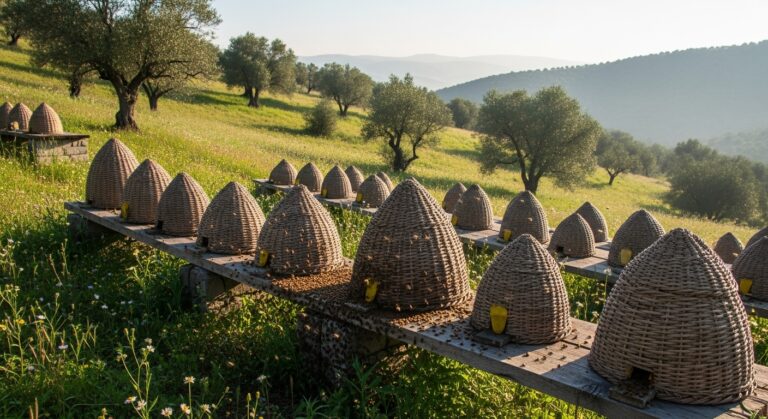
- Simple Hives: Represent traditional methods. This group includes skep hives woven from reeds and branches, and carved (log) hives made from tree trunks.
- Transition Hives: Local hive types in different shapes and sizes that represent the transition from simple structures to modern systems.
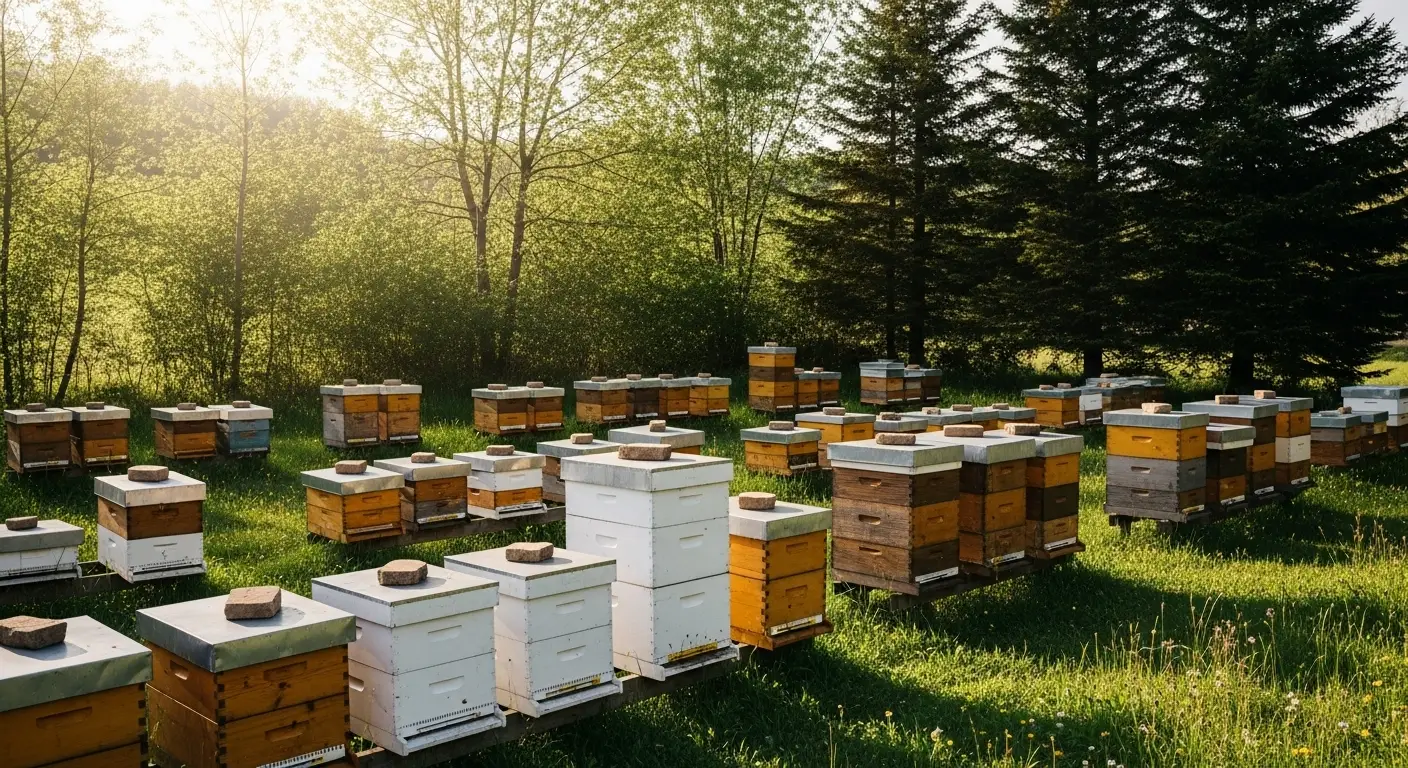
- Modern Hives: Indispensable for professional production, these are systems with movable frames. The most common ones are the Langstroth and Dadant hive models.
Most Preferred Modern Beehive Types
The special-purpose hive types used to increase efficiency in beekeeping are as follows:
- Dadant Hive: An ideal modern beehive model for strong colony management thanks to its wide brood area and high frame volume.
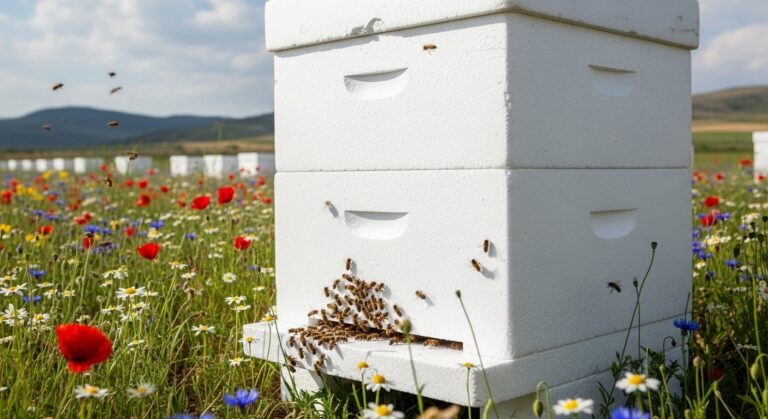
- Thermo Hive: Protects the colony from heat and cold with its structure providing high thermal insulation; it supports bee health by providing humidity control.
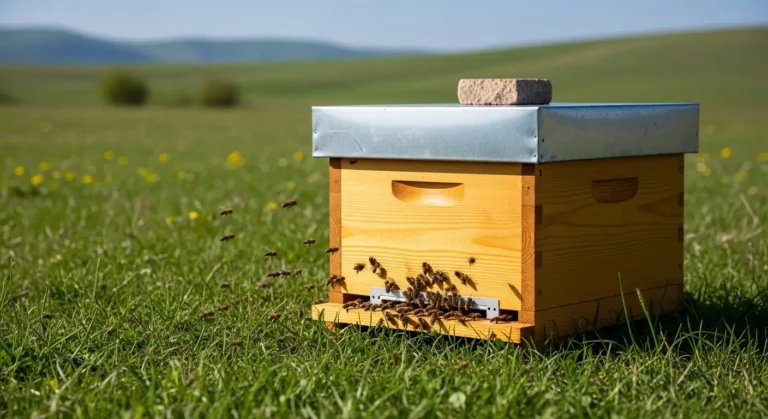
- Nucleus Hive: Among the small-sized hive types designed for queen bee rearing, colony splitting, and transport processes.
Beehive Types Comparison Table
| Hive Type | Intended Use | Prominent Feature |
|---|---|---|
| Skep Hive | Traditional Production | Use of completely natural materials |
| Dadant Hive | Professional Productivity | Large brood rearing area |
| Thermo Hive | Climate Protection | High-level heat and humidity insulation |
| Nucleus Hive | Bee Multiplication | Lightweight and practical transport possibility |
5 Golden Rules to Consider When Choosing a Beehive
Choosing the right beehive directly affects the success of your beekeeping activity. Here is what you need to pay attention to:
- Standard Size: Choose sizes compatible with world standards (Langstroth or Dadant hive) for equipment compatibility.
- Insulation: Evaluate highly insulated models such as thermo hives according to the regional climate.
- Ventilation: Prefer hive types with bottom ventilation systems that prevent moisture formation.
- Material Quality: Choose food-grade, long-lasting, and durable materials.
- Suitability for Purpose: Be sure to keep nucleus hives in your operation for transport and multiplication processes.
A Field Perspective on the Beehive: Real Experiences of Master Beekeepers
Modern beekeeping practices have evolved over the last İtwo centuries. The beehive is not just a shelter but a complex ecosystem tool that directly affects thermoregulation and colony hierarchy.
Comparative Field Analysis of Langstroth and Dadant Hives
Field experiences show that in Langstroth hives, the winter cluster spreads over a wider surface. In contrast, the vertical cluster in Dadant hives facilitates the bees’ access to honey stocks throughout the winter.
| Criterion | Langstroth Hive | Dadant Hive | Field Observation / Technical Note |
|---|---|---|---|
| Climate Adaptation | Temperate and Hot | Cold and Harsh Winters | Dadant traps heat better with a vertical cluster. |
| Direction of Growth | Horizontal Growth | Vertical Growth | Delayed supering in Langstroth increases swarming risk. |
| Brood Chamber Volume | 1x (Standard) | 1.5x (Large) | Queen population reaches a higher level in Dadant. |
| Equipment Compatibility | Full (Standard) | Limited | Dadant frames may not fit standard machines. |
| Overwintering | Medium | High | In Dadant, the bee cluster is directly under the honey. |
Material Science and Technological Approach: Thermo Hives
Thermo hives are described as “5-star hotel comfort.” Master beekeepers solve humidity risks in thermo hives by using screened (anti-varroa) bottoms and keeping them open even in winter.
| Parameter | Wooden Hive | Thermo (Plastic) Hive | Field Analysis |
|---|---|---|---|
| Thermal Insulation | Medium | Very High | Significant honey savings in winter. |
| Moisture Permeability | High (Breathes) | Zero (Impermeable) | Bottom ventilation is a necessity in thermo hives. |
| Disinfection | Very Easy (Blowtorch) | Difficult (Chemical) | Plastic hives cannot be sterilized with fire. |
| Durability | Requires maintenance | Long-lasting | Risk of sagging in some plastic covers. |
Practical Warnings and Technical Errors from the Field
Violation of Bee Space causes frames to stick with propolis. Lack of top insulation leads to condensation dripping onto the winter cluster. Remember: bees die from moisture and hunger, not cold.
Nucleus Hives: Strategic Flexibility in Colony Management
Keeping one nucleus with a spare queen for every 10 large hives is the strongest insurance. Weak colonies survive winter much more vigorously in the narrow volume of nucleus hives.
Frequently Asked Questions
I am just starting, how many hives should I buy?
Start with 2 hives to allow for comparison and supplementation. Langstroth standards are recommended for beginners.
How can I prevent moisture effectively?
Use the “tight insulation from the top, ventilation from the bottom” formula. Screened bottoms ensure moisture is discharged effectively.
How and when should bees be fed in winter?
Avoid liquid syrup in winter as it increases humidity. Use solid fondant only. Wait for 15°C (60°F) in spring for syrup.
What is the most effective management against Varroa mites?
Screened bottoms provide a biotechnological advantage by preventing fallen mites from climbing back onto the bees.
When is it time to harvest the honey?
Harvest when bees have capped at least 2/3 of the honeycombs. Harvesting uncapped honey leads to fermentation.