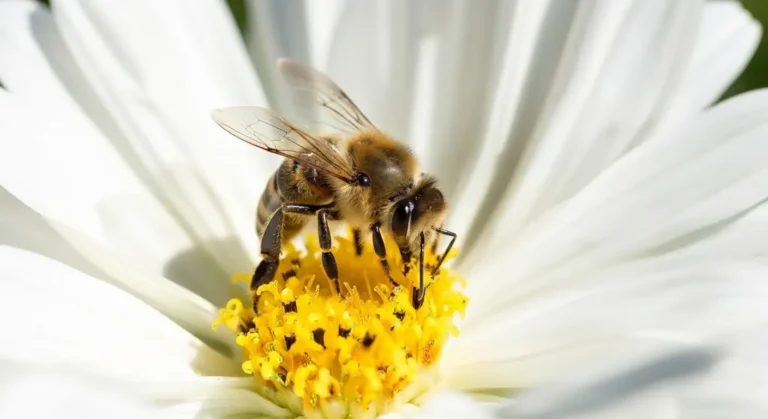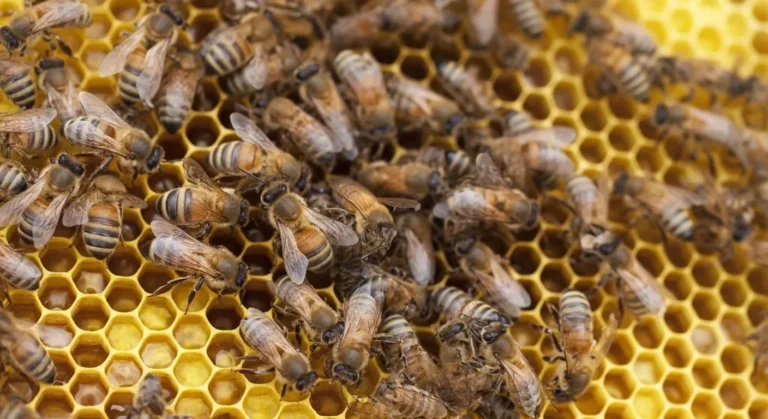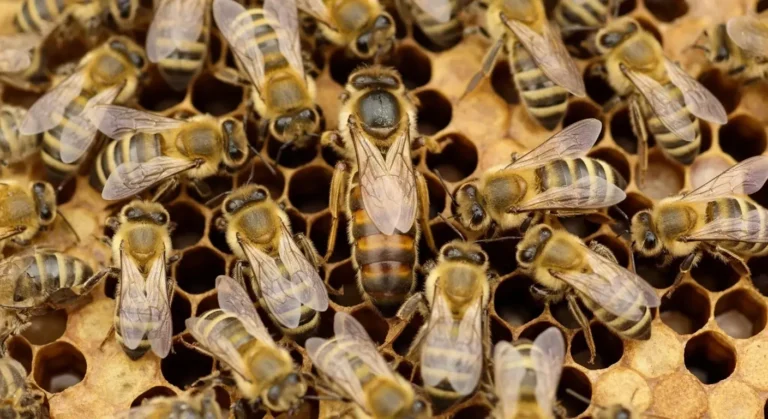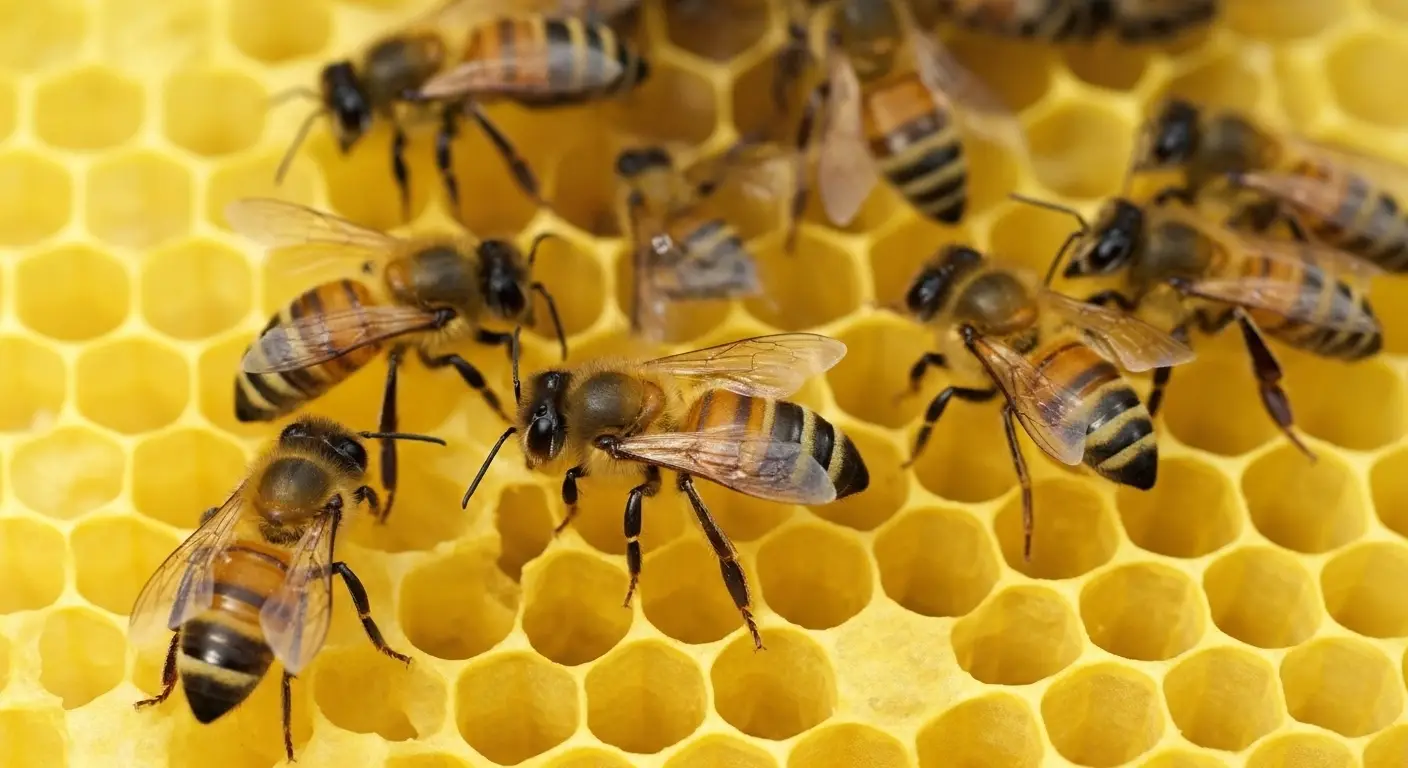
The Cyprus Bee; primarily yellow in color, resembling the Italian bee but possessing a smaller and darker yellow body structure, is a honey bee breed most typically known for being extremely aggressive and prone to stinging. In beekeeping literature, this endemic subspecies stands out with its high aggression level and strong colony defense instinct, sharply distinguishing itself from other regional breeds through its fierce reaction to hive interventions. Although it shares physical similarities with both Italian and Syrian bees, its small morphological structure and uncompromising temperament place the Cyprus bee in a unique taxonomic position. In this article, we will examine the biological adaptation capabilities, queen bee characteristics, and technical impacts on beekeeping management in light of current data.
Characteristics of the Cyprus Bee
- Morphological Structure and Size: Although it exhibits a physical structure similar to the Italian bee, it has a smaller body size.
- Body Color: It is fundamentally yellow in color.
- Pigmentation Difference: The yellow tone on its body is significantly darker compared to the yellow of the Italian bee.
- Characteristic Temperament: The aggression level, defined as the most dominant and “typical” feature of the species, is at an “extreme” level.
- Defense Reflex: Linked to its high level of aggression, it shows a direct “stinging” tendency against interventions.
- Interspecies Similarity: In terms of physical characteristics, it shares a common morphological ground with the Syrian bee and the Italian bee.
Honey Yield and Climate Adaptation of the Cyprus Bee
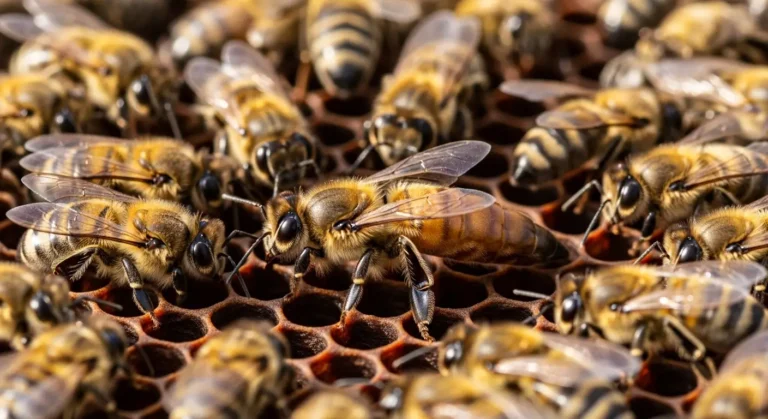
The Cyprus bee constitutes a strategic model in modern beekeeping regarding both honey yield and climate adaptation, thanks to the biological resistance it has developed against the challenging and variable environmental conditions of the Mediterranean. Thousands of years of natural selection have not only made this species resistant to extreme heat but also transformed it into a high-performance pollinator capable of maximizing the use of limited floral resources. Its full compatibility with the local ecosystem allows it to maintain colony continuity even during drought periods when other commercial breeds struggle to survive.
- High Honey Yield: Its pollination capacity is quite high, especially during flowering periods, and colonies achieve significant honey production under suitable floral conditions.
- Rapid Adaptation Ability: The ability to quickly adapt to local climatic conditions and sudden environmental changes ensures the species remains active even in various weather conditions.
- Drought and Heat Resistance: Colony losses of 70-90% seen in breeds from other countries during prolonged droughts and rising temperatures are not experienced in this region, thanks to the experience and resilience of the Cyprus bee.
- Overwintering and Vitality: It possesses high vitality and overwintering ability suitable for Mediterranean typology; it can emerge from harsh winter conditions with minimum losses.
- Natural Disease Resistance: The natural immunity it has developed against regional diseases plays a critical role in maintaining a healthy colony structure and sustainable beekeeping activities.
- Efficient Use of Food Resources: It has the ability to utilize limited and scarce food resources much more effectively than other breeds.
Comparison of the Cyprus Bee with Other Bee Breeds
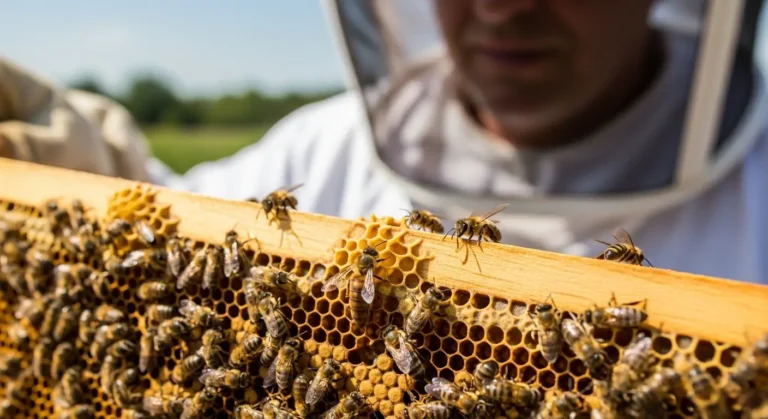
Different bee breeds used globally and in our region show various similarities and sharp differences with the Cyprus bee in terms of productivity and adaptation capabilities. The fundamental element determining colony success in beekeeping is the compatibility of the chosen breed with the regional flora and climate.
- Caucasian Bee: Known for its high adaptation to cold climates and long proboscis structure, the Caucasian Bee is known for its docile temperament, unlike the Cyprus bee, and has a very high nectar collection capacity.
- Italian Honey Bee: The Italian Honey Bee is quite similar to the Cyprus bee in its yellow color; however, the Cyprus bee has a smaller build and a darker yellow body compared to the Italian breed.
- Buckfast Bee: Obtained by crossbreeding different breeds, the Buckfast Bee stands out with its high honey yield and disease resistance, while possessing a calmer nature than the aggressive defense mechanism exhibited by the Cyprus bee.
- Anatolian Bee: The native genetic resource of Turkey, the Anatolian Bee, is known for its resilience to harsh environmental conditions and is a species fully adapted to its local ecosystem, much like the Cyprus bee.
- Persian Bee: Common in the Middle East geography, the Persian Bee shares similarities with the Cyprus bee in terms of aggression but exhibits different morphological characteristics.
- Thracian Bee: Carrying features similar to the Carniolan bee, the Thracian Bee differs from the aggressive and controlled growth structure of the Cyprus bee with its rapid colony development and docility.
- Western Aegean Bee: Showing high performance in pine honey production, the Western Aegean Bee is a hardworking and resilient population compatible with the region’s floral structure.
- Syrian Bee: Visually resembling both Italian and Cyprus bees, the Syrian Bee is known for being very hardworking and having high brood productivity, yet it has a different working discipline than the typical aggressive nature of the Cyprus bee.
Comparative Analysis Table of Bee Breeds
The table below summarizes the morphological and behavioral differences between bee breeds, centering on the characteristic structure of the Cyprus bee:
| Bee Breed | Color and Morphology | Temperament / Behavior | Key Characteristic |
| Cyprus Bee | Small build, Dark Yellow | Extremely aggressive and stinging | High adaptation and defense |
| Italian Bee | Bright Yellow, Large body | Docile and calm | Rapid multiplication, high honey yield |
| Syrian Bee | Similar to Italian and Cyprus bees | Hardworking | Tendency for high brood production |
| Caucasian Bee | Dark gray / Black tones | Very docile | Long tongue structure, cold resistance |
| Anatolian Bee | Dark brown / Gray-brown | Moderately aggressive | High resistance to harsh conditions |
| Buckfast Bee | Variable (Hybrid) | Calm and controlled | Disease resistance and high yield |
| Persian Bee | Yellowish / Gray | Aggressive and robbing | Arid climate adaptation |
| Thracian Bee | Dark colored, Carniolan-like | Very docile | Early spring development |
Strategic Importance of the Cyprus Bee in Beekeeping

The Cyprus bee is one of the most resilient and unique genetic heritages of the Mediterranean geography. Studies prove that although this species shares visual similarities with the Italian bee, it possesses a more compact morphology and a distinct dark yellow pigmentation. The element that makes this species indispensable in modern beekeeping operations is not just its industriousness, but also the superior colony defense provided by its most typical trait: its extremely aggressive and stinging nature.
When compared to productive breeds like the Syrian bee, the uncompromising adaptation shown by the Cyprus bee against harsh climatic conditions and external threats demonstrates that the species is a biological value that must be protected. Consequently, when correct techniques are used in hive management, the potential this breed offers to the beekeeping sector in terms of both honey yield and genetic diversity is an undeniable fact.
Field Perspective on the Cyprus Queen Bee: Real Experiences from Master Beekeepers
The Cyprus queen bee (Apis mellifera cypria) is one of the most characteristic genetic heritages of the Eastern Mediterranean, evoking both admiration in modern beekeeping literature and hesitation due to its aggression. Shaped by thousands of years of isolation and harsh ecological dynamics, this breed is seen by master beekeepers not just as a production tool, but also as a resilient pollinator capable of overcoming difficult conditions. In this article, we will address all details of the Cyprus bee, from egg-laying capacity to aggression management, through a technical perspective with real user experiences filtered from beekeeping forums and professional field reports.
Biological Characterization and Morphological Structure
The Cyprus queen bee and its workers, although phenotypically similar to the Italian bee, are structurally smaller and have a significantly darker yellow tone. Its proximity to the “A” (African) lineage among bee breeds is the fundamental genetic factor explaining why this species has such advanced defense mechanisms.
- Color Variations: Gray bands are dominant on the body in pure lines; transitions between white and deep black tones are observed, while the absence of yellow or red bands is considered a purity criterion.
- Comb Building and Capping Quality: Master beekeepers appreciate this breed’s comb-building ability and especially its skill in sealing honey with a clean, thin layer of capping; this feature directly increases the market value of comb honey.
Field Performance: Egg-Laying Capacity and Population Dynamics

The issue most emphasized by professionals in the field is the queen bee egg-laying capacity and the seasonal management of the hive population. The Cyprus bee draws a very aggressive growth graph in parallel with nectar and pollen flow.
Brood Rearing and Development Rate
Following closely behind rapid-developing species like the Thracian bee in spring, the Cyprus bee can surpass many breeds in terms of colony population by early June. This rapid field performance is directly related to its instantaneous response to nectar flow.
Swarming Tendency
One of the most important features that reduces labor in beekeeping management is the very low swarming tendency of this breed. Experienced beekeepers report that even if it does swarm, the resulting swarm is weak, and the parent hive’s determination to store honey is not interrupted.
Aggression Management: Field Struggle Techniques
Although the “extremely aggressive” nature of the Cyprus bee is a barrier for many beekeepers, professionals overcome this situation with aggression management strategies. This behavior is actually a reflection of its instinct to protect its stores.
- Equipment Selection: In cases where standard veils are insufficient, the use of fully enclosed “astronaut-type” thick fabric suits is a necessity.
- Advanced Smoking: Master beekeepers recommend using corn cobs in the smoker to obtain “cool” and dense smoke; this method is the most effective way to calm the bees without burning them.
- Hunger and Stress Control: It is known that opening the hive immediately after nectar flow stops or after stormy weather triggers the bee’s defense mechanism.
Honey Yield and Climate Adaptation
Contrary to theoretical knowledge, the honey yield of the Cyprus bee gives surprising results in field conditions. A harvest of 30-40 kg of honey per colony appears possible in the right flora.
- Refusal of Feeding: As an interesting user experience, it has been reported that these bees generally reject sugar syrup and are extremely fond of natural nectar sources; this creates a natural guarantee for the purity of the produced honey.
- Overwintering Success: Its ability to enter winter with a strong population and emerge in spring without losses in harsh continental climates and humid coastal strips (such as the Black Sea) proves the strength of the breed’s climate adaptation.
Bee Breed Comparison Table
| Feature | Cyprus Bee | Carniolan Bee | Italian Bee |
| Average Honey Yield | 30 – 60 kg | 35 – 45 kg | 30 – 45 kg |
| Heat Resistance | Very High | Medium | High |
| Aggression Level | Extreme | Very Low | Low |
| Swarming Tendency | Very Low | High | Medium |
Frequently Asked Questions
How is the transport sensitivity of the Cyprus bee mitigated?
The Cyprus bee is very sensitive to transport stress; therefore, it is vital that transportation operations be carried out at night, hive ventilation capacity be maximized, and modern transport vehicles be used if possible.
Are crossbred (F1) Cyprus bees calmer than pure ones?
Field experiences show that the Cyprus bee dominantly passes on its aggression gene; since crossbreeding usually leads to more erratic and unpredictable aggression rather than softening the character, maintaining genetic purity is more advantageous.
Can a beginner beekeeper work with the Cyprus bee?
Experts recommend that beginners stay away from this breed, as the bee’s extreme aggression can lead to a loss of motivation, and the aggression can reach uncontrollable levels during slow hive inspections.
Why does the Cyprus bee perform better at high temperatures?
While cold-climate bees like the Carniolan may experience stress and stop working at temperatures above 40 degrees Celsius, the Cyprus bee, a native of the Mediterranean ecosystem, can continue to actively collect nectar even at these temperatures.
What is the best smoking material for Cyprus bee hive management?
The common recommendation of master beekeepers is the corn cob, which ensures the smoke is both dense and cool; this material allows the smoker to stay lit for a long time and helps calm the bees more effectively.