What is a Langstroth Hive?
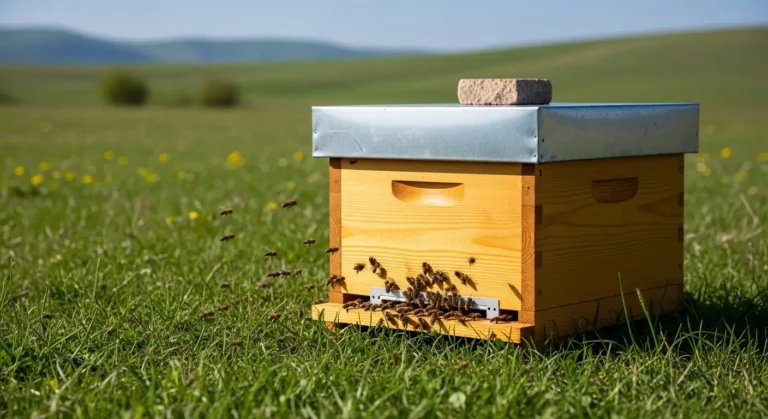
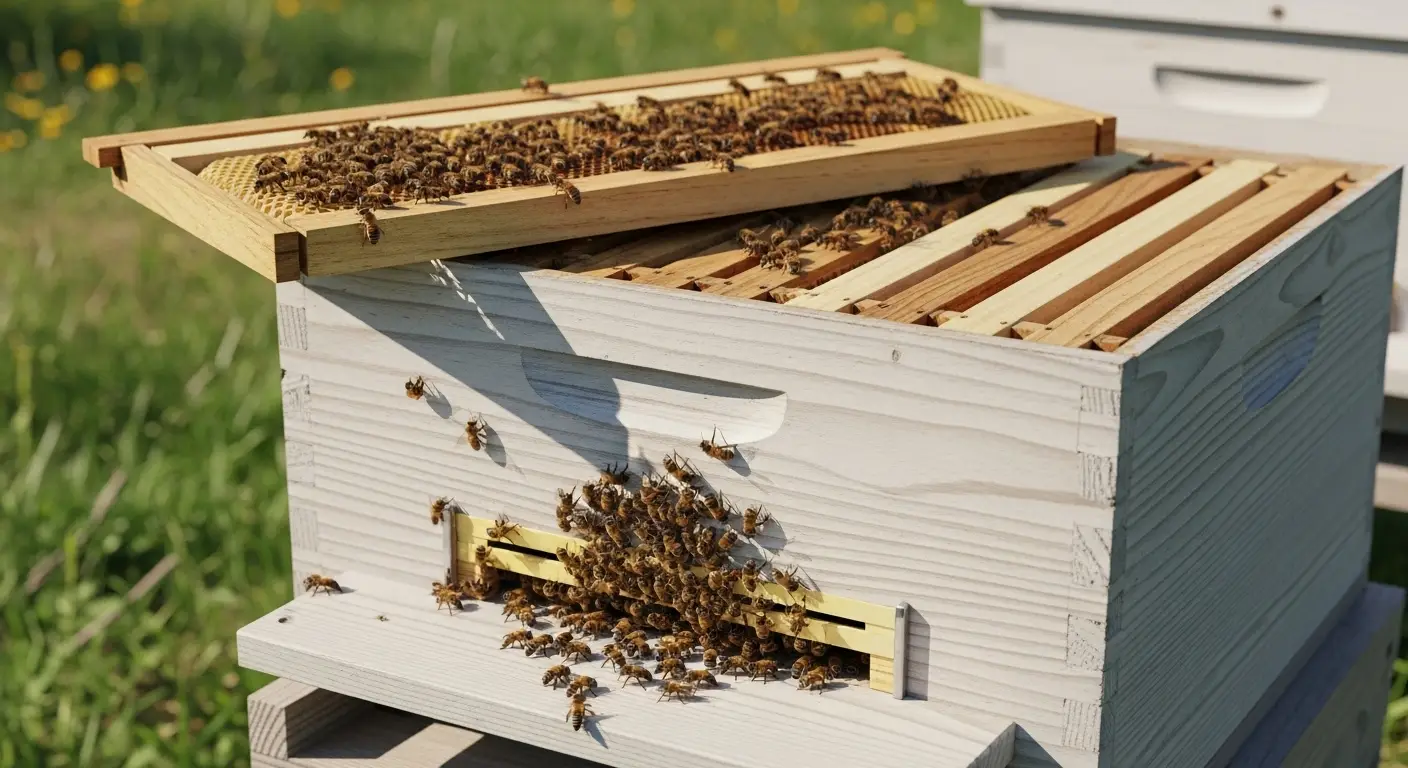
The Langstroth hive is the most widely used modern hive standard in the world, featuring a four-sided wood-enclosed movable full frame system where bees build their honeycombs.
Unlike Top Bar Hives, which only have a top bar, in the Langstroth model, frames are hung inside the hive leaving a specific “bee space.” This design prevents bees from gluing the frames to each other or the hive walls, allowing the honeycombs to be easily inspected, moved, and harvested without being torn apart.
Key Features of the Langstroth Hive
The defining characteristics of this system, developed by L.L. Langstroth, are as follows:
- Movable Frame System: All four sides of the frames are closed, and they can be removed and inspected individually.
- Bee Space: A fixed gap of 6-9 mm between the frames and hive parts prevents bees from sealing the space with propolis.
- Vertical Growth: Modular stories (supers) can be added as the colony grows.
- Standard Dimensions: Global compatibility of parts (bottom board, brood chamber, supers).
Parts of the Langstroth Hive (Hive Anatomy)
- Bottom Board (Hive Floor): Supports the entire structure. Screened or pollen-trap models are common.
- Brood Chamber (Body): The heart of the colony where the queen lays eggs and brood develops.
- Queen Excluder: A grid that keeps the queen in the brood chamber, preventing eggs in the honey supers.
- Honey Super: Stories added for honey storage.
- Frames: The movable rectangular structures where honeycombs are built.
- Inner Cover: Provides insulation and prevents the outer cover from sticking.
- Outer Cover (Telescoping Cover): The waterproof roof protecting the hive.
Advantages and Disadvantages of the Langstroth Hive
Advantages
- Easy Honey Harvest: Reusable combs save the bees’ energy.
- Standardization: Finding spare parts or transferring frames to nuc hives is effortless.
- Portability: Ideal for migratory beekeeping.
- Disease Control: Movable frames allow for thorough inspection of the colony.
Disadvantages and Comparisons
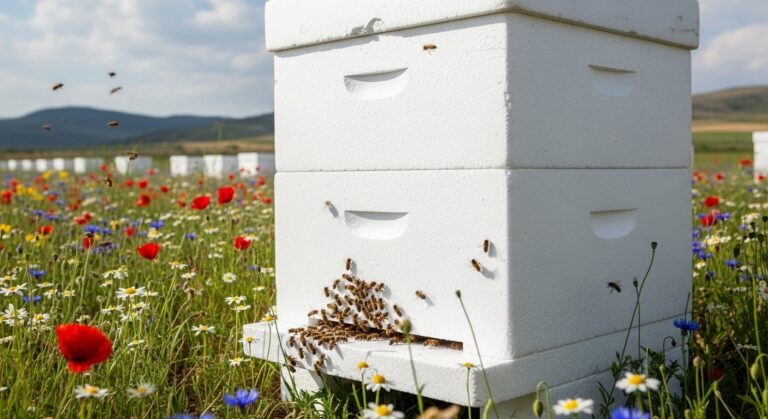
- Insulation Needs: Wooden Langstroths may need help in extreme climates compared to thermo hives.
- Brood Volume: Some prefer the Dadant hive for its larger, single-piece brood chamber.
Langstroth Hive Dimensions and Technical Standards
| Hive Part | Length (External) | Width (External) | Height |
|---|---|---|---|
| Brood Chamber (Body) | 50.5 cm | 43.5 cm | 26 cm |
| Honey Super (Full Depth) | 50.5 cm | 43.5 cm | 26 cm |
| Half Super (Shallow) | 50.5 cm | 43.5 cm | 17 cm |
A Field View of Langstroth Beekeeping: Real Experiences of Master Beekeepers
In the real apiary, Turkey’s geography and climate reshape the standard American Langstroth hive. Here are the field realities from master beekeepers.
Wintering and Moisture Problem: “It’s Not the Cold, It’s the Moisture That Kills the Bee”
The “Sweating” Nightmare: Rain Falling on the Cluster
The metabolic heat of bees produces water vapor. If the Langstroth cover is not insulated, this vapor condenses and drips onto the cluster, causing hypothermia.
Sack Wars: Nylon or Burlap Sack?
- Nylon Fallacy: Nylon traps moisture in winter, leading to mold and disease.
- The “Sack” (Jute/Canvas) School: Breathable materials like sugar sacks allow moisture to escape while retaining heat.
The Open Bottom Board Debate
Bees often use propolis to close screened bottoms, as they hate “drafts” (airflow) in winter.
| Material | Moisture Permeability | Thermal Insulation | Mold Risk | Field Note |
|---|---|---|---|---|
| Nylon | None | High | Very High | Suicide in winter. |
| Inner Cover | Low | Medium | Medium | Often discarded as cumbersome. |
| American Canvas | High | Low | Low | Healthy, requires top supplement. |
| Jute (Sugar) Sack | Very High | Medium | Low | Legendary; expels moisture effectively. |
Weight and Back Health: “10 Frames of Honey Equals One Herniated Disc”
- Half Super Escape: Using shallow supers (12-15 kg) protects the beekeeper’s back.
- Field Trick: Transferring frames one by one into an empty box instead of lifting the whole super.
Frame and Hive Gluing: “Propolis Locks”
Due to moisture swelling, frames often get “locked” to the hive wall with wrist-thick propolis. Master beekeepers use custom steel bars with high leverage power to open these hives without snapping frame lugs.
Migratory Beekeeping Experiences: “Hives Dying on the Road”
- Hive Burning: Stress raises the internal temperature, melting beeswax and “boiling” bees in honey.
- Migratory Screens: Replacing metal covers with screens allows wind to cool the hive during transport.
Critical View: Why Do They Give Up?
- Dadant: Offers a massive, single brood chamber for strong colonies without the need for constant “supering.”
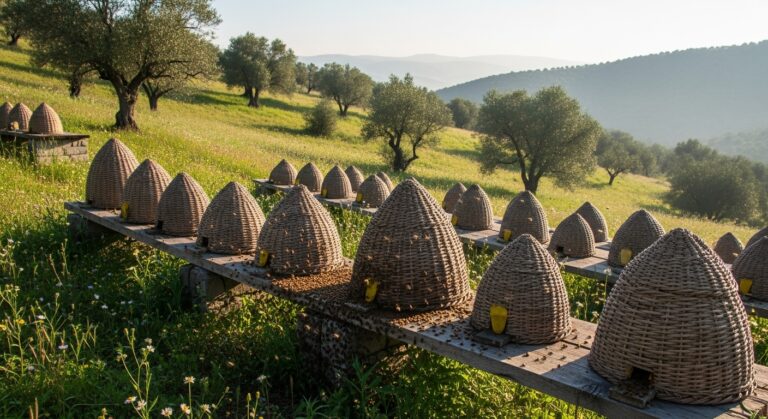
- Log Hive: Some return to traditional logs for naturalness and boutique honey production.
| Feature | Langstroth (Standard) | Dadant (Deep) | Log Hive (Traditional) |
|---|---|---|---|
| Beekeeper Labor | Very High | Low | Very Low |
| Wintering Risk | High | Medium | Low |
| Honey Yield | Very High | High | Low |
Frequently Asked Questions (Real Answers from the Apiary)
My Langstroth hive creates moisture in winter. What should I do?
Stop using nylon. Use a jute sack or canvas that expels moisture, and ensure the hive is raised 20-30 cm from the ground.
Supers are too heavy for my back. What is the solution?
Do not lift the full super. Transfer honey frames individually into an empty box or bucket during harvest.
Lugs break when removing frames because they stick too much.
This is a “bee space” error. Use a specialized bar tool with high leverage instead of a standard thin spatula.
My bees died and the inside is wet. Was it the cold?
No, they likely died of “sweating” (condensation). Increase top insulation with breathable materials in the next season.
Langstroth or Dadant?
Langstroth if you prioritize maximum honey and constant management. Dadant if you have limited time and a sensitive back.
The Langstroth hive is a “Turkish reality” kept alive by the beekeeper’s wrist strength and practical intelligence.