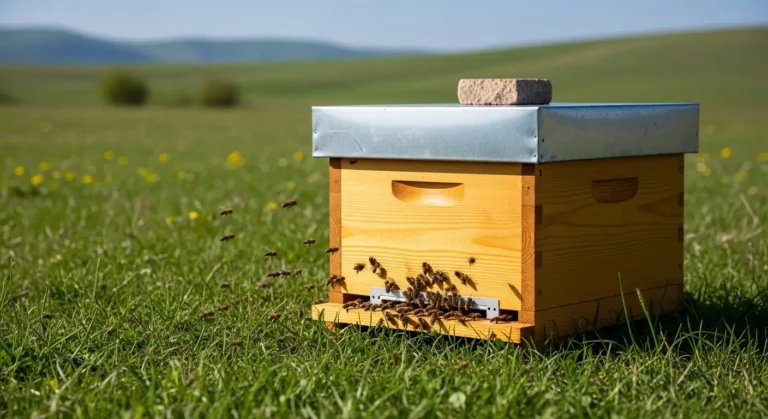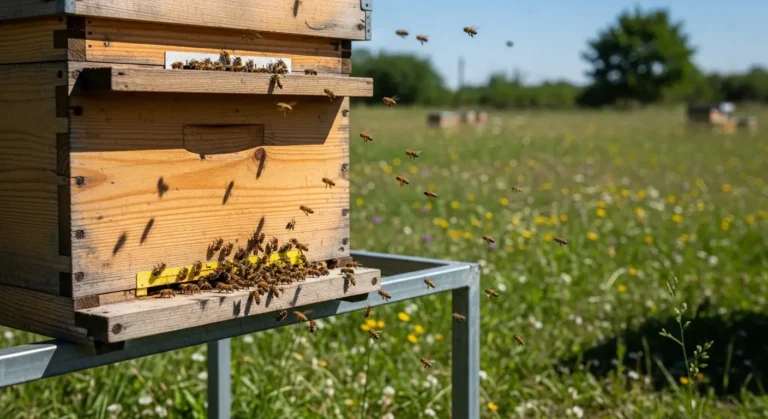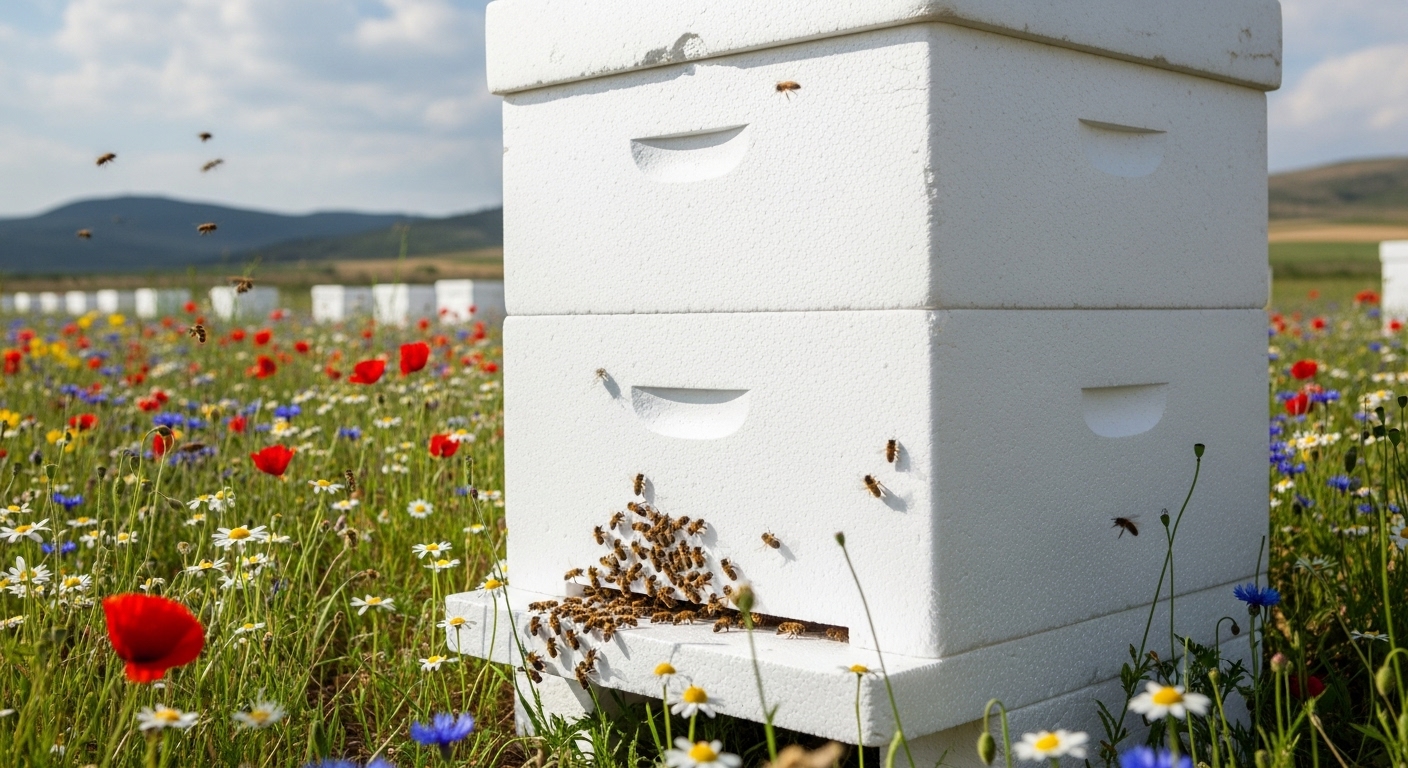
Thermo hive; also known in beekeeping as Styrofoam Hive and Thermal hive, is a heat-insulated modern beekeeping system.
Unlike traditional hives, it provides effective colony management by completely isolating the colony from external weather conditions. This system allows bees to save energy by keeping heat inside during winter and increases honey yield by preventing excessive heat in summer. Combining functions such as feeding, ventilation, and pollen collection in a single structure, these hives have been developed for healthy and productive beekeeping.
Working Principle and Structure of the Thermo Hive
Contrary to popular belief, thermo hives are not simple plastic boxes. These hives are manufactured from high-density EPS (Expanded Polystyrene) or special plastic composite materials possessing food-grade certificates.
“Heat Stabilization” lies at the foundation of its working principle. In nature, bees prefer tree hollows because the thickness of the tree trunk provides natural insulation. Thermo hives are designed to mimic and even surpass this natural insulation. While the wall structure prevents sudden temperature changes in the external environment from reflecting inside the hive, it keeps the internal air circulation in a “breathing” structure.
Advantages of Heat-Insulated Styrofoam Hives
Concrete efficiency increases lie behind the preference for styrofoam hives and thermo systems in modern beekeeping:
- Early Spring Development: Thanks to thermal insulation, the Beehive internal temperature reaches the desired level more quickly. The queen bee starts laying eggs 15-20 days earlier compared to wooden hives.
- Low Overwintering Loss: Since heat loss is minimal in thermo hives, bees spend less energy to heat the hive. This ensures that honey stocks are consumed 30-40% less during winter.
- Lightness and Ease of Transport: While wooden hives become heavy by absorbing moisture, thermo hives have a fixed weight and are ideal for migratory beekeeping.
- Hygiene and Durability: It does not rot, does not absorb water, and does not harbor bacteria. It is much easier to disinfect in case of disease.
Common Thermo Hive Models: Nucleus (Ruchette), Dadant, and Langstroth
Thermo hive technology is produced in standard dimensions familiar to beekeepers, answering every kind of need:
- Langstroth Hive (Thermo): It is the most widely used model in the world and in Turkey. It is the standard for flower honey production and migratory beekeeping.
- Dadant Hive (Thermo): Its brood chamber is deeper than the Langstroth. Since it provides a large brood area, it is superior in creating very strong colonies.
- Nucleus Hive (Thermo): These small models are the most practical and economic thermo solution for queen rearing and artificial splitting.
- Skep Hive (Traditional): As one of the oldest methods, these models are preferred for the production of “Karakovan honey,” a traditional solution for pure honey.
Thermo Hive or Wooden Hive?
The fundamental differences between traditional wooden hives and modern thermo hives are as follows:
- Thermal Conductivity: In thermo hives, thermal bridges do not form; every point of the hive has equal and high insulation.
- Moisture and Water Absorption: Thermo hives possess hydrophobic (water-repellent) properties; even if it rains outside, the inner walls of the hive remain dry.
- Maintenance: While wood requires paint and repair every year, thermo hives do not require maintenance for many years.
Ventilation and Moisture Control in Thermo Hives
Moisture occurs when warm air hits a cold surface. In thermo hives, the inner walls are always warm, thus preventing condensation and mold formation.
The ventilation system works with a combination of a screened bottom with pollen trap, cover ventilation louvers, and insulated walls. This allows bees to easily evacuate moisture and stale air.
Field Perspective on Thermo Hive Beekeeping: Real Experiences of Master Beekeepers
Reports from the field show that these hives present a sharp choice between “Biological Performance” and “Mechanical Durability.”
“Transition from Shack to Palace”: Overwintering and Moisture Management
- Dry Overwintering: Users state that moisture is evacuated without condensing thanks to the bottom and top ventilation.
- Honey Savings: Field data confirms that colonies in thermo hives consume 30-40% less honey in winter.
Spring Awakening: Experiment and Growth Speed
- Experimental Example: In a trial conducted in the same apiary, it was determined that a colony in a thermo hive reached 8 frames at the beginning of spring, while a wooden hive remained at 5-6 frames.
- Weak Colony Support: Even a weak swarm, when taken into a thermo hive, can reach a surprising honey yield by the end of the season.
The Other Side of the Coin: Durability and Pest War
- Mouse and Ant Infestation: Mice can gnaw through styrofoam hives from the outside, and ants may nest in the pores.
- Bees Gnawing and Light Problem: If the styrofoam hive is unpainted and leaks light, bees try to gnaw through that area. Masters recommend dark-colored exterior paint.
Return on Investment: Comparison of Wooden and Thermo Hives
| Comparison Criterion | Traditional Wooden Hive | Thermo / Plastic Hive |
| Unit Cost (Index) | 1 Unit (Reference) | ~4.4 Units (High Investment) |
| Estimated Life | 4-5 Years (15+ with maintenance) | 10 Years (Theoretical data) |
| Maintenance Cost | High (Paint, repair) | Low (Washing only) |
| Honey Yield Impact | Standard Yield | Claim: +18 kg/season (20% increase) |
| Depreciation Risk | Low (Cheap raw material) | High (Risk of theft and breakage) |
The “Blowtorch” Crisis in Hygiene and Cleaning
The “burning with a blowtorch” method is impossible in these hives. Beekeepers are forced to use washing methods with bleach, soda, and hot water, which increases labor.
Questions About Thermo and Styrofoam Hives
Do bees get overwhelmed by the heat in thermo hives during summer?
If the ventilation is adjusted correctly, they do not. Insulation prevents not only the cold but also excessive heat.
Do bees really eat the styrofoam hive?
Yes, they can gnaw it. This can be prevented by painting the hive exterior with silicone exterior paint to cut off the light.
How durable are thermo hives, do they break immediately?
They are sensitive to physical impacts and mouse attacks compared to wood, especially during transport if squeezed too tightly.
How should I clean these hives?
You definitely must not use fire. Wash and scrub the hives with a mixture of washing soda, bleach, and hot water.
Will the thermo hive pay for itself?
It is very profitable for hobby and queen rearing due to prevented winter losses, but the initial investment cost is high for massive commercial operations.