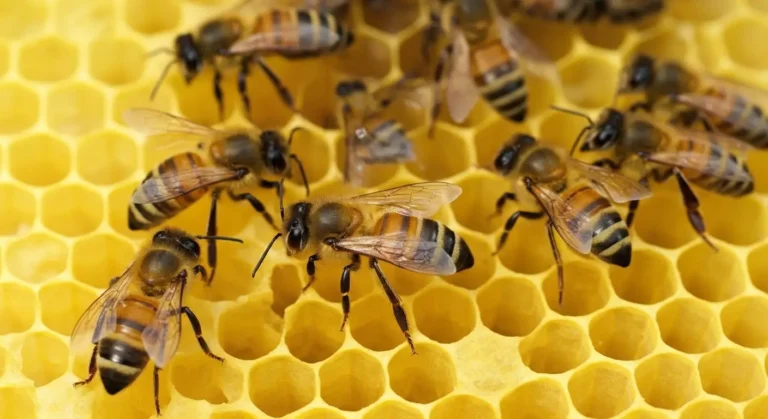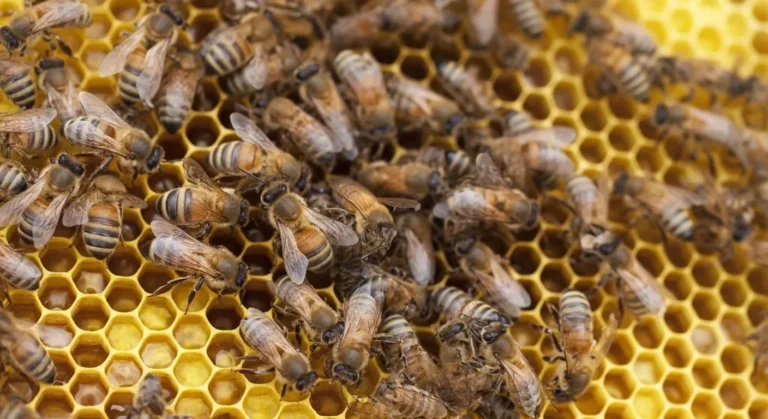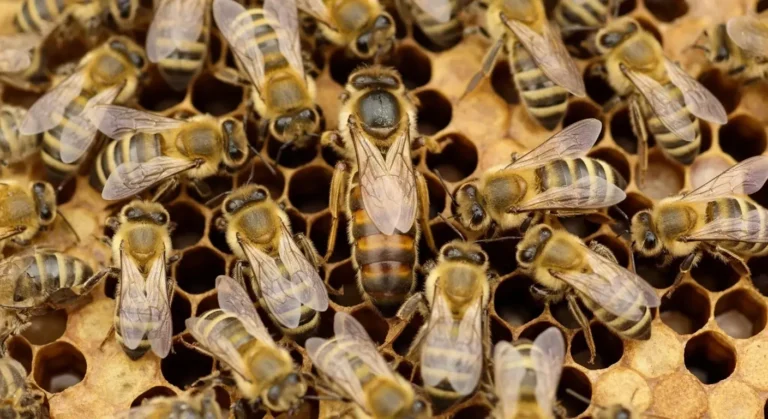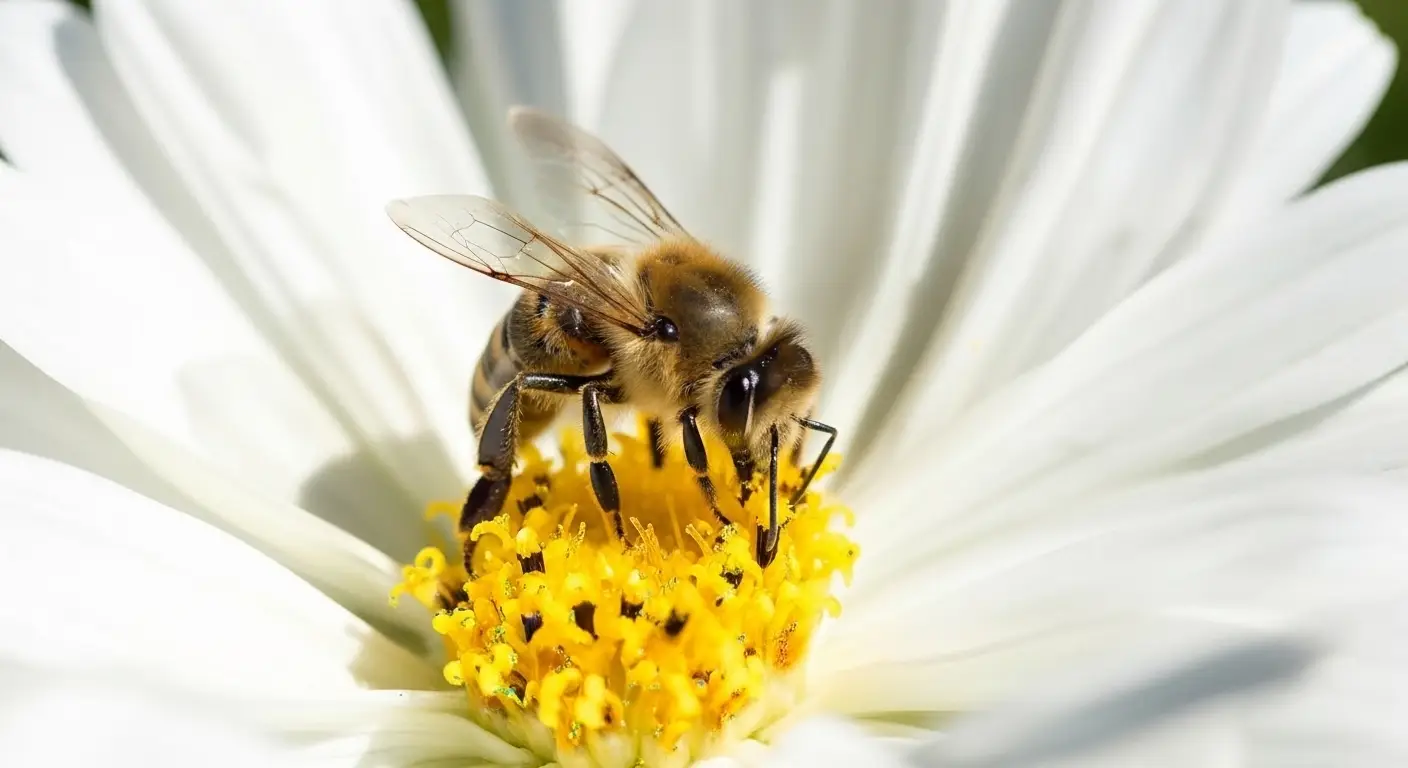
The Syrian Queen Bee; known for being exceptionally industrious and prolific in brood rearing, similar to Italian and Cyprian bees, is a honey bee subspecies with high drought climate adaptation. Morphologically characterized by pale-colored stripes on three abdominal segments, this race (Apis mellifera syriaca) can maintain its colony presence even in extreme temperatures thanks to its ability to utilize limited nectar sources and its genetic resistance. Standing out in beekeeping for its honey yield and rapid development capacity, this bee is also defined as an ecotype with a strong defense mechanism (aggressiveness) and a high swarming tendency.
Characteristics of the Syrian Bee
- Genetic Similarity: It exhibits similar characteristic features to the Italian and Cyprian bee races.
- Work Ethic: It has a very industrious nature regarding nectar collection and colony activities.
- High Reproductive Capacity: Depending on seasonal conditions, it has a high ability to produce excessive brood and provide rapid population growth.
- Morphological Structure: There are distinct, pale-colored stripes on three segments of the bee’s abdomen.
- Extreme Temperature Resistance: As it possesses a Middle Eastern ecotype, it is one of the most resistant honey bee subspecies to high temperatures and arid climate conditions.
- Defense Mechanism: Its instinct to protect the colony is very strong; this leads to aggressive behaviors, defined among beekeepers as “defensiveness” or “aggressiveness.”
- Swarming Tendency: It has a genetically high swarming potential; therefore, colony management must be carefully planned.
- Nutritional Economy: Its ability to protect honey stocks and survive even during periods of scarce resources is highly developed.
Honey Yield and Climate Adaptation of the Syrian Bee
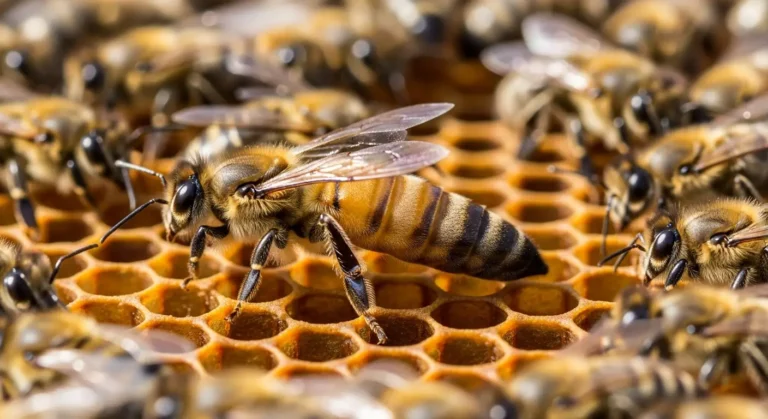
The economic value of the Syrian Bee lies in its high honey yield and unique climate adaptation capabilities displayed under extreme natural conditions. This race exhibits a very hardworking character, similar to Italian and Cyprian bees, continuing production even in the scorching heat of the Middle East and Southeastern Anatolia, where many other bee races cease their activities.
The fundamental elements determining the productivity and adaptation strategy of the Syrian Bee are as follows:
- Rapid Population Increase: Thanks to its ability to produce excessive brood, it meets sudden nectar flow periods in spring with a maximum number of worker bees, achieving high storage in a short time.
- Heat and Drought Resistance: Being an ecotype of the region, its thermoregulation (in-hive temperature balance) ability is excellent even in extreme heat; this allows it to spend its energy on honey production.
- Adaptation to Sparse Flora: During periods when nectar sources are scarce, it demonstrates the ability to gather sustenance even from the furthest distances due to its industrious nature.
- Overwintering Ability: Although adapted to hot climates, it can survive difficult periods with minimum losses by using limited food stocks economically.
The Syrian Bee has become a strategic resource for modern beekeeping, especially in geographies where the effects of global warming are felt, due to its genetic resistance and stress tolerance. This physical structure, characterized by pale stripes on three abdominal segments, provides an evolutionary advantage in reflecting sun rays and coping with heat.
Comparison of the Syrian Bee with Other Bee Races
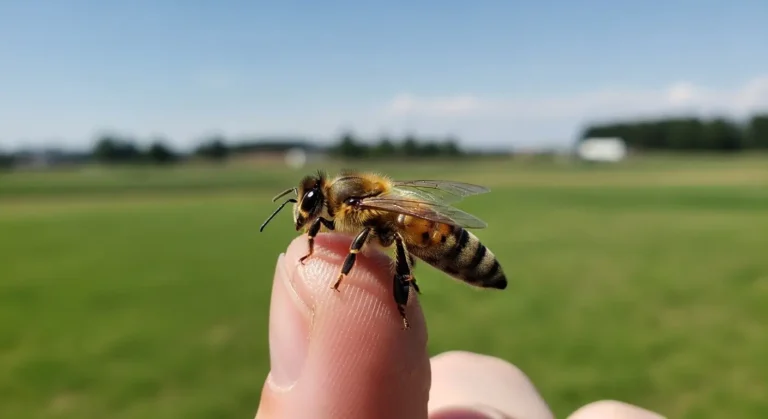
Among honey bee races worldwide, the Syrian Bee holds a unique place, particularly for its resilient structure and high adaptation capability. For beekeepers aiming to maximize regional productivity, comparing the Syrian Bee with other popular races is critical for choosing the right colony.
- Caucasian Bee: Known for its tongue length and cold climate hardiness, the Caucasian Bee is productive in high-altitude regions; whereas the Syrian Bee stands out with its hot climate performance and drought resistance.
- Italian Honey Bee: Showing great similarity to the Syrian Bee in terms of industriousness and brood yield, the Italian Honey Bee has a calmer temperament but is not as resilient as the Syrian Bee in extreme heat.
- Buckfast Bee: Although the Buckfast Bee, a bred hybrid, stands out with its docility and honey yield, the Syrian Bee’s natural genetic resistance and defensive instinct against local parasites are higher than this hybrid race.
- Cyprian Bee: Physically and behaviorally most similar to the Syrian Bee, the Cyprian Bee has an industrious character and high brood capacity, just like the Syrian race.
- Anatolian Bee: Usually dark in color compared to the pale stripes of the Syrian Bee, the Anatolian Bee is a resilient race noted for its calmness, strong overwintering ability, and low robbing tendency.
- Persian Bee: Adapted to the Middle Eastern geography like the Syrian Bee, the Persian Bee has similar levels of aggressiveness but differs from the Syrian race in terms of genetic lines and yield characteristics.
- Thracian Bee: An ecotype of the Carniolan race, the Thracian Bee is known for its low swarming tendency and calmness, while the Syrian Bee is characterized by a higher swarming instinct and aggressive defense mechanism.
- West Aegean Bee: Known for its high adaptation to pine honey production, the West Aegean Bee is dominant on the western coasts of Anatolia, while the Syrian Bee shows higher performance in the scorching steppes of the interior and the south.
Bee Race Comparison Matrix
| Bee Race | Characteristic Features | Climate Adaptation | Honey Yield and Industriousness |
| Syrian Bee | Aggressive, high brood yield, and pale stripes on 3 abdominal segments. | Extreme Heat and Arid | Very industrious; converts scarce resources into honey. |
| Anatolian Bee | Generally dark-colored, calm, and resilient. | Continental Climate / High Altitude | Industrious; low robbing tendency. |
| Italian Bee | Calm temperament; produces excessive brood like the Syrian bee. | Temperate and Mediterranean | High; but requires constant feeding (syruping). |
| Cyprian Bee | Very industrious, similar to the Syrian bee. | Hot and Island Climate | High; but aggressiveness is difficult to control. |
| Caucasian Bee | Very long-tongued and very calm. | Cold and Humid Mountainous | High; unrivaled especially in deep-tubed flowers. |
| Buckfast Bee | A bred, docile hybrid with a low swarming tendency. | Wide Adaptation | Focused on the highest honey yield in commercial beekeeping. |
| Carniolan (Thracian) | Very docile; emerges from winter cluster with low population. | Cold and Harsh Winters | Ideal for early spring nectar. |
Why the Syrian Bee?
As seen in the table, the Syrian Bee possesses a level of industriousness similar to Italian and Cyprian bees, but the main difference that sets it apart is the pale-colored stripes in its morphological structure and its determination to survive in challenging geographies. If the region where you practice beekeeping has scorching heat, you must choose between the calmness of the Anatolian Bee and the dynamism of the Syrian Bee.
A Field Perspective on the Syrian Queen Bee: Real Experiences of Master Beekeepers
The Syrian Bee (Apis mellifera syriaca), an ecological heritage of the Levant geography for thousands of years, is among the most unique bee races in the modern beekeeping world that both inspires admiration and requires mastery to manage. For professional beekeepers in the field, this race is not just a honey producer; it is a “survival expert” evolved against extreme heat, prolonged nectar scarcity, and intense predator pressure. In this article, we will examine the real experiences of master beekeepers at the hive, along with technical data and field tips.
Aggressiveness or Active Defense Mechanism?

The “aggressiveness,” which is the first feature that comes to mind when the Syrian Bee is mentioned in beekeeping forums, is actually defined by masters in the field as an active defense mechanism. This race’s nervous system is programmed to respond within milliseconds to hornet and bee-eater attacks in the region.
Management Secret of Master Beekeepers: “Cold Smoke” and Timing
Standard methods often prove insufficient when working with the Syrian Bee. The most critical advice from the field is:
- Timing: The “golden hours” for opening the hive are between 10:00 AM and 2:00 PM on sunny, windless days when foragers are out in the pasture.
- Cold Smoke Technique: Using a combination of corn cobs and wood shavings in the smoker, the dense but non-burning “cold smoke” calms the bees by blocking alarm pheromones.
- Clothing Choice: Pure white, smooth-textured thick suits should be preferred; as black or floral patterns trigger the attack instinct.
Performance and Adaptation Report Card of the Syrian Bee
The Syrian Bee is known as the “champion of marginal areas.” Especially in temperatures reaching $48^\circ C$ where other races struggle with in-hive cooling efforts, this race can actively continue to collect nectar.
Regional Adaptation and Risk Table
| Region | Adaptation Success | Primary Risk Factor | Recommended Race |
| Southeastern Anatolia | Very High | Summer drought and extreme heat | Pure/Hybrid Syrian |
| Aegean Coastline | Medium | Early awakening and nectar competition | Anatolian or Carniolan |
| Eastern Black Sea | Low | High humidity and winter cold | Caucasian (A. m. caucasica) |
| Central Anatolia | Medium – Low | Day-night temperature difference | Anatolian (A. m. anatoliaca) |
Pros and Cons According to Field Experiences
Based on the observations of master beekeepers, we can summarize the advantages and disadvantages of working with the Syrian Bee as follows:
Advantages (Pros):
- Varroa Resistance: It can survive with 40-50% less chemical intervention compared to other races; it exhibits high Varroa Sensitive Hygiene (VSH) behavior.
- Drought Performance: It switches to stock protection mode by stopping egg-laying as soon as the nectar flow is cut off.
- Predator Defense: It establishes a disciplined defense line at the hive entrance by cutting off flights during hornet attacks.
Disadvantages (Cons):
- Excessive Swarming: A colony can produce more than 100 queen cells at once, which can disrupt honey production.
- Absconding: When conditions (water loss, parasite pressure) become too severe, there is a risk of the colony completely abandoning the hive.
- Aggressiveness Management: Keeping them in apiaries close to residential areas creates security risks.
Frequently Asked Questions
How far should Syrian Bee hives be from residential areas?
Master beekeepers strongly recommend being at least 500-800 meters away from residential areas due to this race’s wide defense radius.
Does it have a natural advantage in Varroa control?
Yes, the Syrian Bee genetically possesses “Varroa Sensitive Hygiene” (VSH) behavior, detecting and removing parasitized brood, thus requiring less treatment.
How is aggressiveness managed during harvest?
Instead of shaking or brushing the frames, using a low-pressure air blowing technique and not completely taking the honey in the brood chamber minimizes “stock panic” and aggressiveness in the bees.
How is the purebred Syrian Bee distinguished from hybrids in the field?
Purebred individuals “run” quickly to the dark corners of the hive (nervous temperament) rather than forming clusters on the comb when the hive is opened, and the orange-yellow bands on the abdominal segments are more homogeneous.
Why does the Syrian Bee fail in cold climates (e.g., Black Sea)?
As a dry climate bee, it contracts fungal diseases in high humidity, and since it cannot form a winter cluster as tightly as the Caucasian bee, it faces the risk of colony collapse in cold winters.