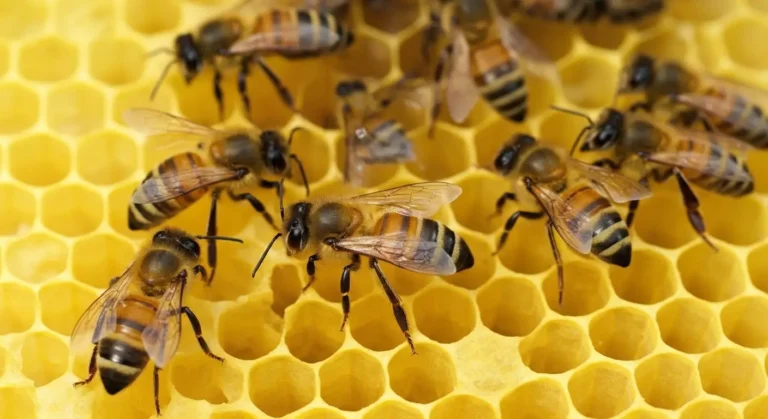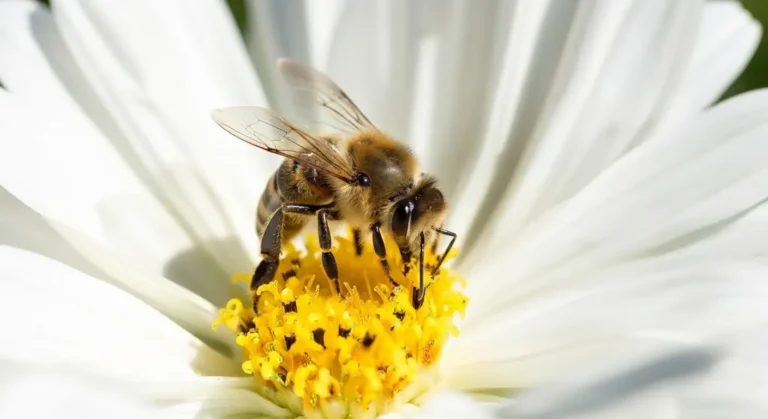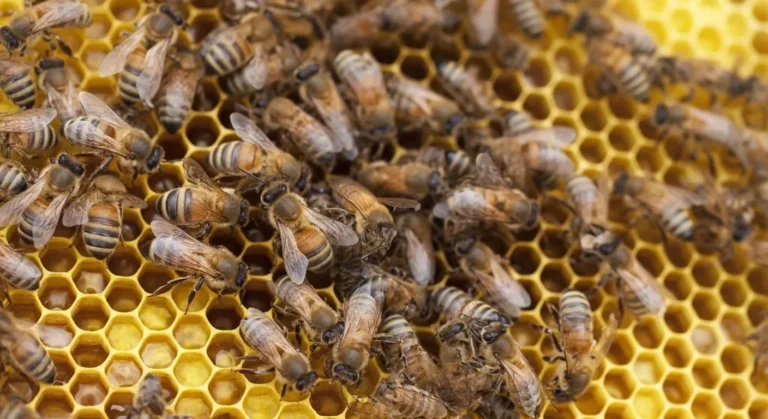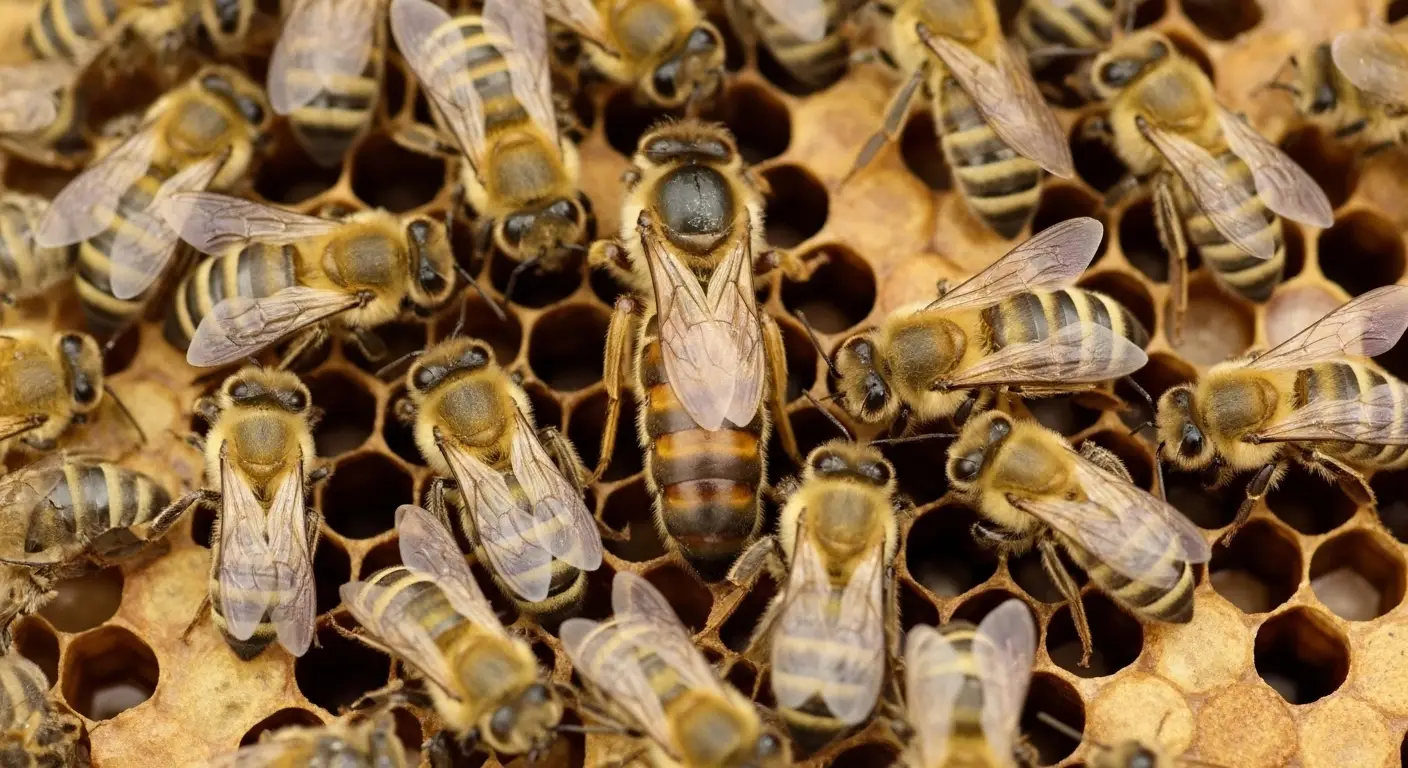
Thrace Queen Bee; is the fundamental biological force that has perfectly adapted to regional climatic conditions (especially strong winds and variable temperatures), genetically based on the Apis mellifera carnica (Carniolan) lineage, ensuring high reproductive capacity and colony continuity. The Thrace bee stands out in colony population dynamics by having a lifespan 6 to 9 days longer than other common breeds. This breed, capable of rapid development in early spring, is one of the most strategic genetic resources for modern beekeeping operations due to its high honey yield during the main nectar flow in June and July and its gentle character.
Features of the Thrace Bee
- Extended Lifespan: Having a lifespan 6 to 9 days longer compared to other bee breeds directly increases in-hive labor efficiency and colony longevity.
- Superior Overwintering Ability: Thanks to its resistance to harsh climatic conditions and high overwintering capacity, it survives the winter months with minimum loss and low food consumption.
- Rapid Colony Development: The rapid development potential it exhibits during the spring months ensures that the colony enters the nectar flow period at the highest population level.
- Seasonal Honey Yield: Especially during the main honey flow period in June and July, it has a higher honey-storing capacity than its competitors due to its superior collection speed.
- Gentle Character: Its docile nature and calm working discipline, which provide great convenience for beekeepers, minimize aggressive behavior during hive inspections.
- Genetic Adaptation: Its genetic structure, showing similarities to Anatolian and Carniolan (Apis mellifera carnica) breeds, is fully adapted to the flora of the Marmara and Thrace regions.
- High Speed and Productivity: Its speed capability and industriousness during nectar collection processes allow it to exhibit maximum productivity even in limited time frames.
Morphology and Physical Structure of the Thrace Bee
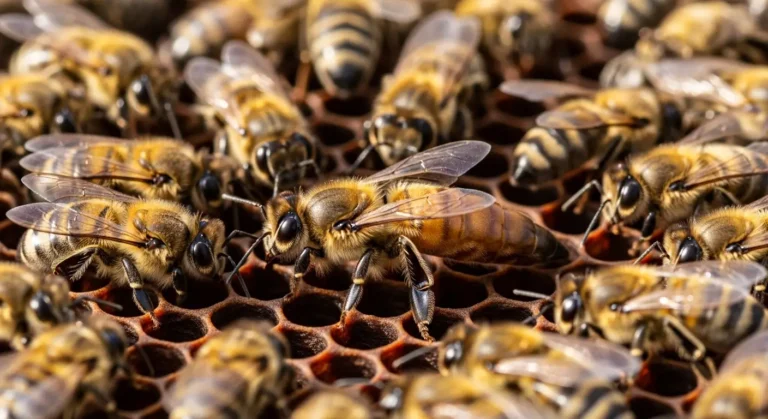
The Thrace bee is a species that has fully adapted to the Marmara ecosystem through its physical characteristics and genetic lineage, morphologically showing similarities to the Anatolia and Carniolan (Apis mellifera carnica) bee breeds. Its gentle body structure, which provides both durability and ease of work, makes this breed ideal for modern beekeeping techniques.
- Breed Similarity and Typology: It bears a high degree of similarity to Anatolian and Carniolan bee species in terms of structural features and appearance.
- Gentle Nature and Temperament: This species, which has a calm working discipline, possesses a characteristic docility that facilitates the beekeeper’s work during hive inspections.
- Physiological Resistance: Its body structure has evolved to exhibit high overwintering ability against winter conditions, with a high success rate of survival even in challenging environments.
- Speed and Maneuverability: Exhibiting a dynamic structure in nectar collection processes, this breed stands out with its superior speed and productivity.
- Development Dynamics: Being structurally characterized by rapid development supports the fast growth of the colony during the spring months.
Thrace Bee Honey Yield and Nectar Flow
The honey yield of the Thrace bee is significantly high compared to many breeds in Turkey, thanks to the high working discipline and rapid nectar collection ability of the colony. This bee species, which benefits from the regional flora at a maximum level, exhibits high honey-storing capacity by evaluating short-term and intense nectar flows in the most efficient way.
- June and July Performance: The Thrace bee is known as a breed that stores honey very well, especially in June and July when the nectar flow peaks.
- Productivity and Speed: Its high speed during nectar collection processes allows it to reach a high production volume even in a limited time.
- Lifespan Advantage: Being able to live 6 to 9 days longer than other breeds ensures the preservation of the forager bee population and, consequently, increases honey yield.
- Industriousness and Stability: Due to both its gentle nature and high productivity, it is a frequently preferred species for honey production in modern beekeeping.
Thrace Bee and Climate Adaptation

The adaptation of the Thrace bee to climate conditions is the most important factor determining the survival success of the colony in the strong winds and variable weather conditions of the Marmara and Thrace regions. This species, which has a genetically durable structure, stands out as a regional ecotype capable of successfully surviving the harsh conditions of the winter months.
- Superior Overwintering Ability: Its ability to overwinter against challenging weather conditions is very high, completing this process with minimum losses.
- Regional Adaptation: It has fully adapted to the unique climate conditions of the Thrace and Marmara regions with genetic characteristics similar to Anatolian and Carniolan species.
- Rapid Spring Development: Colonies emerging from winter show the ability to develop very quickly as the weather warms up, becoming ready for the new season.
- Resilience: Its physiological resistance to sudden temperature changes during seasonal transitions is high.
Comparison with Other Bee Breeds
Different bee breeds used in Turkey and worldwide have characteristic features that distinguish them from the Thrace bee in terms of productivity and adaptation capabilities. When compared to the docility and longevity of the Thrace bee, each breed has its own advantages and disadvantages:
- Caucasian Bee: Known as the longest-tongued bee breed, the Caucasian Bee stands out with its ability to collect nectar from deep-tubed flowers and its high tendency to collect propolis; it is extremely resistant to cold climates.
- Italian Honey Bee: Common worldwide, the Italian Honey Bee is known for its high egg-laying capacity and gentle nature, but prefers temperate climates due to high food consumption in winter.
- Buckfast Bee: Developed by crossbreeding different breeds, the Buckfast Bee is popular in commercial beekeeping for its resistance to diseases, low swarming tendency, and gentle working discipline.
- Western Aegean Bee: Regionally also called the “Efe Bee,” the Western Aegean Bee exhibits high performance especially in pine honey production and is known for its resistance to Nosema disease.
- Cyprian Bee: Having a small and yellowish structure, the Cyprian Bee has a high brood-rearing capacity despite exhibiting a very fierce and stinging temperament.
- Syrian Bee: Showing similarities to Italian and Cyprian bees, the Syrian Bee is adapted to arid and hot climates, characterized by being very industrious and producing many offspring.
- Anatolian Bee: One of Turkey’s most resilient local genotypes, the Anatolian Bee attracts attention with its low honey consumption during winter and high survival power against harsh natural conditions.
- Persian Bee: Distributed in the Southeastern Anatolia region, the Persian Bee (Apis mellifera meda) bears similar characteristics to Syrian and Cyprian bees; it is known for its aggressive nature and high swarming tendency.
Bee Breeds Performance Comparison Table
| Bee Breed | Honey Yield | Overwintering Ability | Temperament (Docility) | Development Speed | Distinctive Advantage / Disadvantage |
| Thrace Bee | Very High (June-July) | High (Resistant to harsh conditions) | Very Gentle and Calm | Fast Development | 6-9 days longer lifespan |
| Caucasian Bee | Very High (Deep nectar) | Excellent (Cold climate) | Very Gentle | Slow-Medium | Longest tongue structure and intense propolis use. |
| Italian Bee | High | Medium (Prefers temperate climate) | Gentle | Very Fast | Very high brood yield, high winter stock consumption. |
| Anatolian Bee | High (In difficult conditions) | Excellent | Medium / Can be fierce | Medium | Low food consumption and high survival power. |
| Buckfast Bee | Very High | Good | Very Gentle | Fast | Very low swarming tendency; commercial hybrid breed. |
| Western Aegean Bee | High (Especially pine honey) | Good | Medium | Fast | Resistant to pine honey flora and Nosema disease. |
| Cyprian Bee | Medium / High | Good | Fierce / Aggressive | Fast | Drought resistant but difficult to manage (stinging). |
| Syrian Bee | Medium | Low | Fierce | Fast | Full adaptation to hot and arid climates. |
| Persian Bee | Medium | Medium | Aggressive | Medium | High swarming tendency and robbing behavior. |
Why Choose the Thrace Queen Bee?
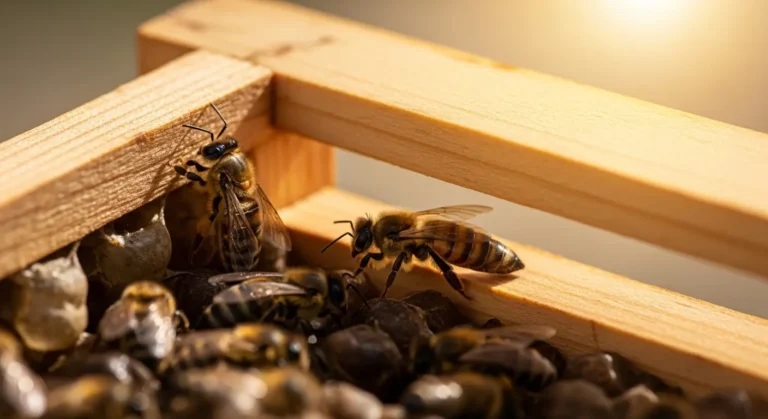
The Thrace bee is considered one of the most strategic breeds in Turkey due to the biological and economic advantages it offers for both professional beekeeping enterprises and hobbyist beekeepers. Here are the reasons to prefer this special ecotype:
- Unique Longevity: Living 6 to 9 days longer compared to other bee breeds directly increases productivity by ensuring the hive’s forager team collects honey for a longer period.
- Maximum Honey Yield: It maximizes the beekeeper’s seasonal earnings with the high performance it exhibits, especially in June and July when nectar flow is intense.
- Peaceful Working Environment: Thanks to its calm and gentle nature, it facilitates hive inspections and offers a safe working discipline with its low tendency to sting.
- Low Winter Loss: Thanks to its high overwintering ability, it survives harsh weather conditions with minimum loss and enters the spring months with a strong population.
- Rapid Spring Dynamics: Carrying the strong characteristics of Anatolian and Carniolan bees, this species develops very quickly in spring and becomes ready for the nectar season at full capacity.
- Productivity and Speed: Its speed during nectar collection processes allows for high honey production even in a limited time.
Field View of the Thrace Queen Bee: Real Experiences of Master Beekeepers
The Thrace queen bee (Apis mellifera anatoliaca – Thrace ecotype), one of the most critical links in Turkey’s biological richness, is a miracle of nature shaped over thousands of years in the isolated ecosystem of the Istranca (Yıldız) Mountains in the northwest of the Marmara Region. This special species, known in academic circles as the “Istranca bee,” holds the title of being the second bee breed taken under protection in Turkey after the Caucasian bee. In this article, we go beyond theoretical knowledge to analyze the statements of master beekeepers on forums, field observations, and real user experiences.
Genetic Identity and Morphological Differences
Although the Thrace bee was confused with the Carniolan group in the past due to physical similarities, genetic studies have proven it to be a unique ecotype under the umbrella of the Anatolian bee, yet quite distinct from it. The Thrace bee has a smaller body structure and shorter/narrower wings compared to the Carniolan breed; this feature provides it with superior maneuverability in the dense forest cover and windy Istranca geography.
Table 1: Morphological Comparison Analysis
| Morphological Feature | Thrace Bee (Ecotype) | Carniolan Breed | Anatolian Bee |
| Body Size | Small / Compact | Medium / Large | Large / Durable |
| Wing Structure | Short and Narrow | Long and Wide | Wide and Flexible |
| Color | Grey / Dark | Silvery Grey | Mixed (Dark-Yellow) |
Voices from the Field: Positive and Negative Experiences
The shares of master beekeepers on digital platforms provide sincere data regarding the real performance of the Thrace bee.
Master Statements and Advantages
- Calmness and Comfort: The pure Thrace ecotype is described by beekeepers in the field as the “gentlest bee breed in the world.” Users state that there is no need to even wear a mask when working with this bee.
- Climatic Intelligence: The Thrace bee does not engage in uncontrolled egg-laying during temporary warmths called “false spring”; it adjusts its population to weather conditions with millimetric precision. This is the most critical mechanism that prevents the colony from collapsing during sudden frosts in March.
- Longevity: The fact that worker bees live an average of 6-9 days longer than other breeds directly increases honey yield by preserving the hive’s forager power.
Systemic Criticisms and Concerns
In field experiences, criticisms generally focus on management processes rather than the biological structure of the bee:
- Production Disruptions: Beekeepers argue that the supply of quality breeding queen bees is handled with a “civil servant mentality” and the market’s needs are not sufficiently met.
- Genetic Purity Concern: The region’s proximity to the Bulgarian and Greek borders raises concerns that uncontrolled bee traffic could disrupt the genetic structure.
Regional Adaptation Report
The performance of the Thrace bee outside its own region is the biggest subject of curiosity for beekeepers:
- Aegean Region: The Thrace bee adapts perfectly to the variable spring weather of the Aegean (February-March); since it does not lay eggs early, it minimizes the risk of brood chilling in sudden colds.
- Central Anatolia: Its ability to enter winter clusters with a small number of bees in a harsh continental climate is a great advantage. However, it has been observed that the resistance of the Anatolian queen bee is more stable in regions with an altitude of 1500+.
- Black Sea: Its habituation to the misty Balkan climate of Istranca indicates that this bee can also be successful in the humid weather of the Black Sea coastline. Especially the high honey-storing capacity of the bee coincides with the chestnut honey season at the end of June.
Q&A: Technical Tips from Master Beekeepers
Which queen bee is most suitable for Istanbul, Çatalca, and the Thrace region?
For the Thrace region and the northern parts of Istanbul, master beekeepers recommend Carniolan (Carnica) or the region’s native Thrace bee. The “genetic intelligence” of the Thrace bee regarding variable weather gives the most efficient results in regional conditions.
Does the breed and temperament of the hive change when the queen bee is replaced?
Yes. When the queen bee in a hive is replaced, about 45 days later the old workers die and are replaced by the offspring of the new queen. Thus, the colony begins to show the characteristics of the new breed entirely (docility, industriousness, etc.).
Can the Thrace bee really fight Varroa (bee mites) on its own?
“Grooming” behavior (self-cleaning) against Varroa has been detected in some colonies of the Thrace bee. However, experts emphasize that this does not mean completely abandoning treatment, but only that this process can be passed more resiliently than other breeds.
If I just buy a queen bee and put it in an empty hive while starting from scratch, will a colony be established?
Absolutely not. A queen bee cannot live alone; she needs worker bees to feed and lay eggs. For beginners, starting with “Package Bees” where worker bees, brood, and the queen bee are together increases overwintering success.
What is the most critical rule in queen bee acceptance?
The queen bee should be given with a cage, and the hive should definitely not be opened for the first 3 days after the cage is placed. The bees should be expected to get used to the pheromone; it should not be forgotten that they will not accept the new queen if there is a hidden queen or queen cell in the hive.
Statistical Field Data
Table 2: Colony Loss Rates per Hive (User Statements)
| Bee Breed / Ecotype | Thrace (Cold Winter) | Central Anatolia (Harsh Winter) | Aegean / Mediterranean (Mild Winter) |
| Thrace Bee | 5% – 10% | 10% – 15% | 2% – 5% |
| Italian Bee | 40%+ | 50%+ | 10% – 15% |
| Muğla Bee | 80%+ | 90%+ | 5% – 10% |
Field data and master user experiences show that the Thrace queen bee is unrivaled, especially in docility, overwintering ability, and adaptation to variable weather conditions. The mass death of Muğla bees brought to the region in the past because they could not overwinter has once again proven the value of local genetics. The most important advice for beekeepers is to work with this “smart” bee that has adapted to its own geography over thousands of years, instead of foreign hybrids brought from outside.